





Blogs
- What a Multi-Currency Counting Machine Actually Does
- Why the GCC Is a Different Game Entirely
- 5 GCC Businesses That Can't Survive Without a Multi-Currency Counting Machine
- Ready to Stop Counting Cash by Hand?
- Products by Category
- What to Actually Look For in a Machine
- The Compliance Side Nobody Talks About
- Choosing Based on Volume, Not Just Budget
- Final Thoughts
- FAQs
- Get the Right Machine for Your Business, Not Just Any Machine
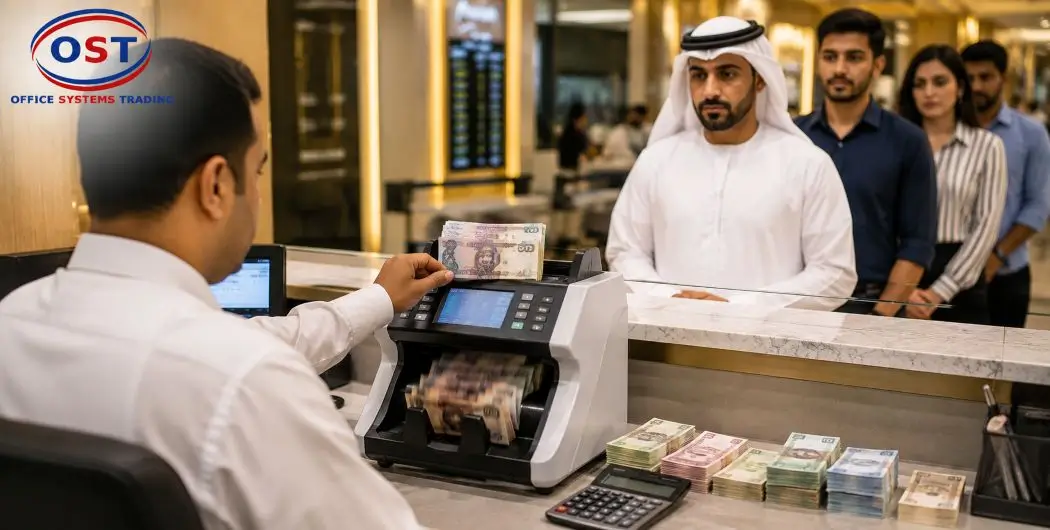
Picture a busy exchange counter in Deira on a Friday afternoon. Dirhams, riyals, dollars, and a stray stack of Indian rupees all land on the same desk within ten minutes. Somebody has to count that pile fast, count it correctly, and catch the one fake note hiding in the middle. A human can do this. A tired human, after the fourth hour of the shift, usually can’t.
That’s the entire argument for a multi-currency counting machine in one paragraph. The Gulf runs on cash from dozens of countries at once, and businesses that still count by hand are quietly losing time, money, and sometimes their reputation.
This article looks at which GCC businesses genuinely need this equipment, why the region makes multi-currency handling a daily reality rather than an occasional headache, and what separates a decent machine from an expensive paperweight.
What a Multi-Currency Counting Machine Actually Does
A multi-currency counting machine counts, sorts, and value-checks banknotes from several countries in a single pass. It doesn’t just tally notes like a basic counter. It recognizes the currency, reads the denomination, checks it against counterfeit-detection sensors, and gives you a total value on screen.
Most serious models on the market today, including machines from Hitachi and Glory, support anywhere from 15 to 32 currencies loaded into memory at once. That range matters more in the GCC than almost anywhere else in the world.
Why the GCC Is a Different Game Entirely
Three things make cash handling in the Gulf unusual.
First, the workforce is overwhelmingly expatriate, and remittance culture runs deep. Money moves between currencies constantly, both informally and through licensed channels.
Second, tourism and hospitality bring in notes from Europe, Asia, Africa, and the Americas on any given day, especially in Dubai, Abu Dhabi, and Doha.
Third, GCC currencies like the UAE dirham and Saudi riyal are pegged to the US dollar, so USD shows up in daily transactions far more casually than in most other regions.
Put those three together and you get businesses that handle five or six currencies before lunch. A single-currency counter simply wasn’t built for that.
5 GCC Businesses That Can’t Survive Without a Multi-Currency Counting Machine

1. Currency Exchange Houses
This one is obvious, but it’s worth spelling out. Exchange houses in the UAE operate under a licence from the Central Bank of the UAE, and that licence comes with real obligations around counterfeit detection and reporting. The Central Bank’s Exchange Business Regulation requires licensed exchange businesses to implement policies and procedures specifically for detecting counterfeit currency and reporting incidents to the right authorities.
You cannot meet that obligation by eyeballing notes under a desk lamp. A machine with UV, magnetic, and infrared detection isn’t a nice-to-have here. It’s part of staying licensed.
2. Hotels and Hospitality Groups
Front desks in Gulf hotels take payment in whatever the guest happens to be carrying, tip envelopes in mixed currency, and cash from multiple outlets across the property. A finance team reconciling this manually at the end of each shift loses hours it doesn’t have.
A multi-pocket sorter lets the cashier office batch and verify everything from multiple restaurants, the spa, and the front desk in one sitting instead of separating currencies by hand first.
3. Retail Chains in Tourist and Free Zone Areas
Malls near tourist corridors, duty-free areas, and free zone retail outlets see a real mix of currencies, especially during peak travel seasons. Staff without a proper sorter end up accepting notes they can’t verify quickly, which is exactly how counterfeit bills slip through.
4. Remittance and Money Transfer Centers
Remittance is a massive part of daily commerce across the GCC, and centers handling this volume deal with source currencies from a huge range of countries. Speed matters here just as much as accuracy, since queues form fast during peak remittance days like month-end paydays.
5. Restaurants, Supermarkets, and Cash-Heavy Retail
Even businesses that mostly deal in local currency still take the occasional foreign note from tourists or expat customers who forgot to exchange money first. A basic mixed-denomination counter handles local notes fine, but it won’t flag a foreign bill correctly, and that’s where losses quietly happen.
Ready to Stop Counting Cash by Hand?
If your team is still separating currencies manually before counting them, you’re paying for that time whether you notice it or not. Browse Ostmena’s full range of multi-currency counters and sorters, built for exchange houses, hotels, and cash-heavy retail across the UAE and GCC.
Explore the collection here →Products by Category
-
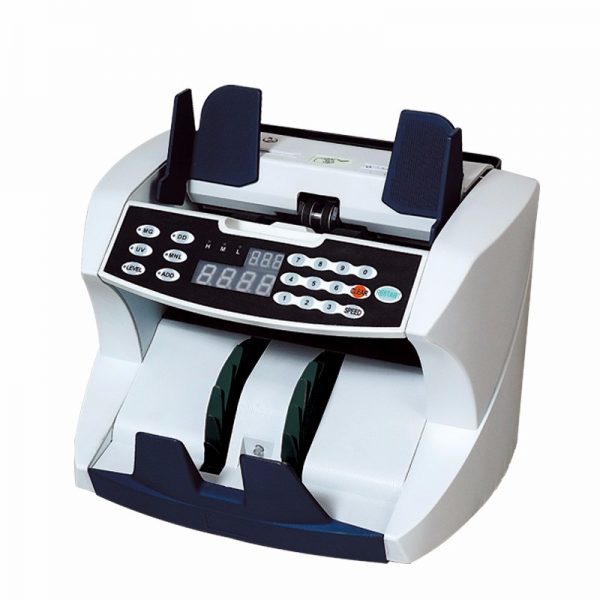
BAIJIA BJ-2100UV Currency Counting Machine
575.00 AED -
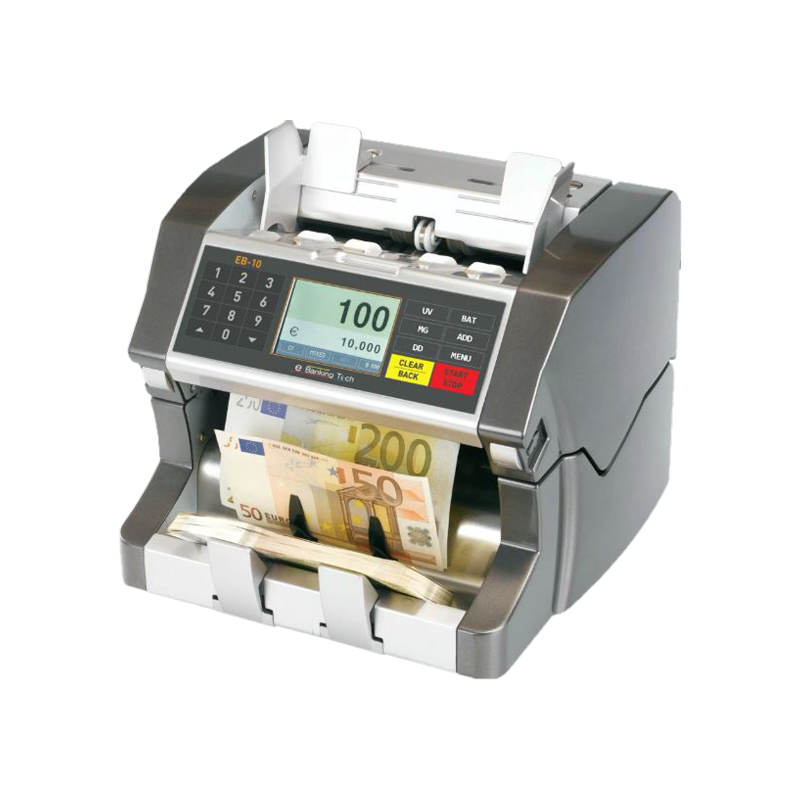
EBANKING EB-10 Heavy Duty Currency Counter
2,300.00 AED -
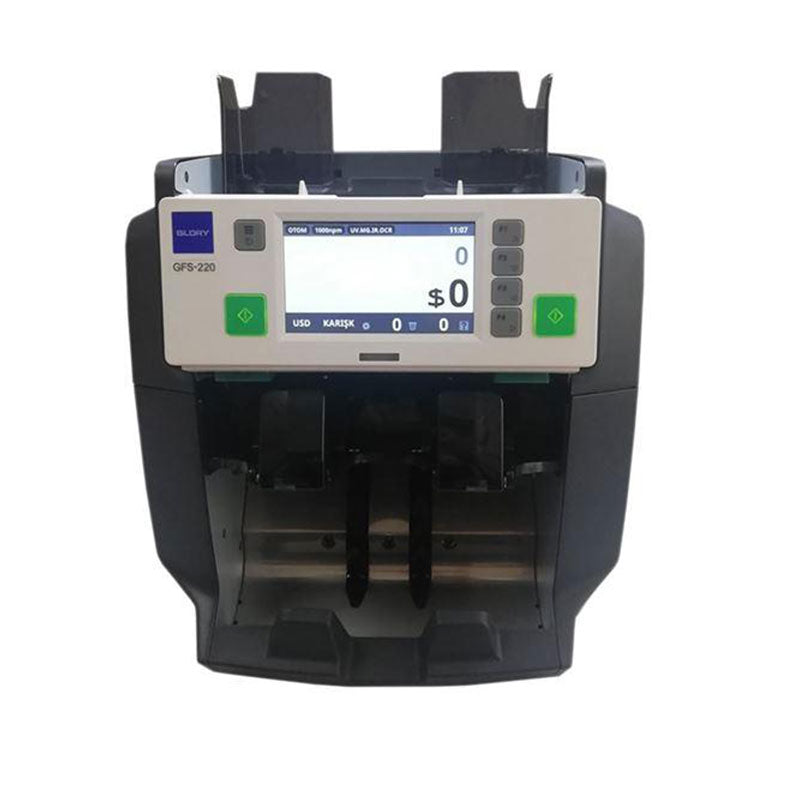
GLORY GFS220CS Banknote Counting Machine
9,200.00 AED
What to Actually Look For in a Machine
Specs matter more than marketing copy, so here’s what separates entry-level from serious equipment.
Currency capacity. The Hitachi IH-210 supports up to 32 currencies with dual full-color CIS sensors, full-line magnetic detection, infrared, and ultraviolet checks. It counts at 1,300 notes per minute with a 1,000-note hopper, which suits exchange houses and hotels with real daily volume.
Sorting pockets. A single-pocket counter is fine for a small retail till. A 2-pocket or 3-pocket sorter separates rejected, damaged, or mixed-currency notes automatically, which saves a huge amount of manual re-sorting.
Fitness sorting. The Hitachi ST-350N adds fitness sorting on top of counting, flagging torn, taped, soiled, or de-inked notes so damaged currency doesn’t get recirculated. That matters more for banks and large retailers than for a small shop, but it’s worth knowing the option exists.
Entry-level options. Not every business needs a top-tier sorter. The Plus P-30 handles up to 15 currencies with a two-pocket discriminator and a compact footprint, which works well for a mid-size retail counter that doesn’t need bank-grade throughput.
For a full side-by-side of what’s currently available, Ostmena’s Currency Counting & Sorting Machines category lists models from Hitachi, Glory, Mirage, and Kisan together.
The Compliance Side Nobody Talks About
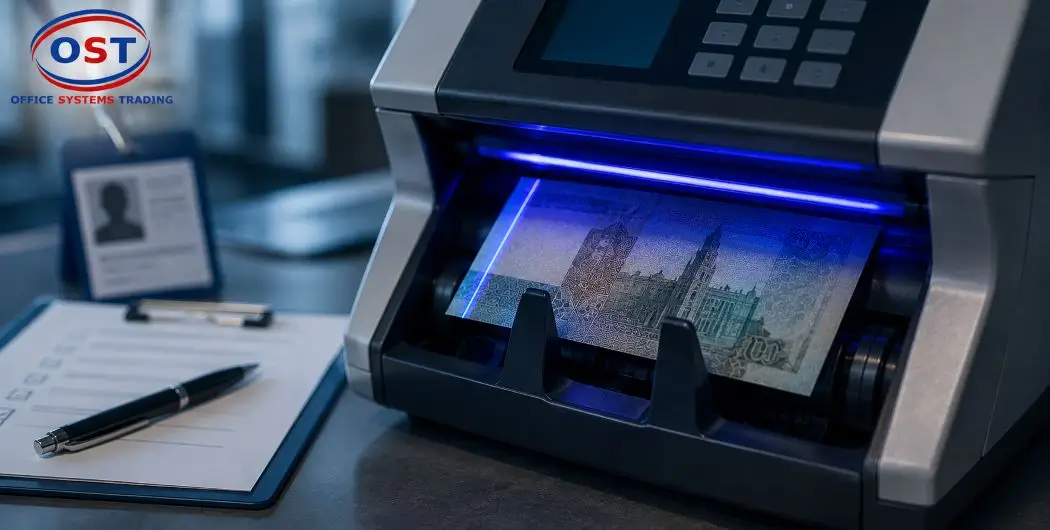
Here’s the part most product pages skip entirely. If your business operates as a licensed exchange house in the UAE, counterfeit detection isn’t optional paperwork. The Central Bank’s regulatory framework requires licensed persons to have real, working procedures for catching counterfeit currency and reporting it through proper channels, and examiners can check on this.
A machine with genuine UV, MG, and IR sensors gives you a paper trail and a consistent standard every shift follows, instead of relying on whichever staff member happens to be sharp-eyed that day. It’s a compliance tool as much as a productivity one.
Choosing Based on Volume, Not Just Budget
A common mistake is buying the cheapest machine that technically “does multi-currency” and regretting it within a year. Match the machine to your actual daily volume instead.
A boutique retail counter handling the occasional foreign note doesn’t need a 1,300-note-per-minute sorter. A remittance center processing hundreds of transactions daily absolutely does. Buying too small means constant jams and staff frustration. Buying too large means paying for throughput you’ll never use.
Final Thoughts
The GCC doesn’t run on a single currency, and businesses that pretend otherwise end up paying for it in staff hours, reconciliation errors, and the occasional counterfeit note that slips through. Exchange houses, hotels, tourist-zone retail, remittance centers, and even everyday cash-heavy shops all benefit from equipment built for mixed-currency volume, not adapted from a single-currency counter.
The right machine pays for itself in the hours it saves your team and the mistakes it prevents. That’s not a sales pitch. That’s just what happens when you stop asking a human to do a sensor’s job.
FAQs
Most professional models support 15 to 32 currencies loaded into memory, covering major currencies like USD, EUR, GBP, AED, and SAR along with regional currencies common across South Asia and Africa. The exact number depends on the model.
It depends on how often you take foreign cash. A shop that occasionally gets tourist currency can usually manage with a basic mixed-denomination counter, while businesses handling foreign notes daily benefit from true multi-currency detection.
Yes. Licensed exchange houses in the UAE must follow Central Bank requirements that include implementing procedures to detect and report counterfeit currency, as outlined in the CBUAE’s Exchange Business Regulation.
A counter simply counts and totals value. A sorter physically separates notes into pockets by currency, denomination, orientation, or fitness, which speeds up reconciliation for high-volume businesses.
It depends on daily transaction volume, but models counting between 1,000 and 1,800 notes per minute, like the Hitachi ST-350N or Glory GFB-800, comfortably cover most mid-to-large operations in the GCC.
Get the Right Machine for Your Business, Not Just Any Machine
Every business on this list needs something slightly different, and picking the wrong model is an expensive mistake to fix later. Talk to Ostmena’s team about your daily cash volume and currency mix, and get matched with the right counter the first time. Visit the Ostmena blog for more buying guides, or head straight to the product range to compare models.
Explore the collection here →