





Blogs
- What Is a Cash Management System?
- ash Management vs Cash Handling: What's the Difference?
- How Do Cash Management Systems Work?
- Currency Counting Machines
- Products by Category
- Currency Sorting Machines
- Counterfeit Detection Systems
- Products by Category
- Coin Counting and Sorting Systems
- 1. Faster Cash Processing
- 2. Improved Accuracy
- 3. Better Counterfeit Protection
- 4. Reduced Manual Work
- 5. Improved Cash Reconciliation
- 6. Better Cash Security
- 7. Higher Operational Efficiency
- Manual Cash Handling vs Automated Cash Management
- Banks
- Exchange Houses
- Retail Stores
- Supermarkets
- Hotels
- Cash-in-Transit Companies
- Frequently Asked Questions
- Get the Right Machine for Your Business, Not Just Any Machine
Managing physical cash efficiently becomes increasingly challenging as transaction volumes grow. Manual counting, sorting, verification and reconciliation can consume valuable time while increasing the possibility of errors and cash discrepancies.
Cash management systems bring together technologies and equipment designed to make these processes faster, more accurate and more secure.
For businesses in the UAE and GCC, a modern cash management approach can include currency counting machines, banknote sorting machines, counterfeit detection equipment, coin processing systems and automated cash-handling solutions.
But cash management is not limited to a single machine. It is a complete process covering how physical cash is received, counted, authenticated, sorted, reconciled, secured and prepared for the next stage of the cash cycle.
This guide explains how cash management systems work, the equipment involved, their benefits and how businesses can choose the right solution for their operations.
What Is a Cash Management System?
A cash management system is a combination of processes, equipment and technology used to control and process physical cash efficiently.
Depending on the business, a system may include:
- Currency counting machines
- Banknote sorting machines
- Counterfeit detection systems
- Coin counting and sorting machines
- Cash processing equipment
- Cash reconciliation processes
- Cash security solutions
- Automated cash-handling technology
The objective is simple: process cash accurately, efficiently and securely while reducing unnecessary manual work.
Retailer, this could mean counting and verifying daily takings before depositing them.
For an exchange house, it may involve processing multiple currencies and denominations.
For a bank or cash-intensive organization, it may involve high-volume counting, sorting, authentication and reconciliation.
ash Management vs Cash Handling: What’s the Difference?
The terms are closely related but are not always interchangeable.
Cash handling generally refers to the physical activities involved in receiving, counting, moving, verifying and storing cash.
Cash management is broader. It can include the equipment, processes, controls and procedures used to manage the complete cash cycle.
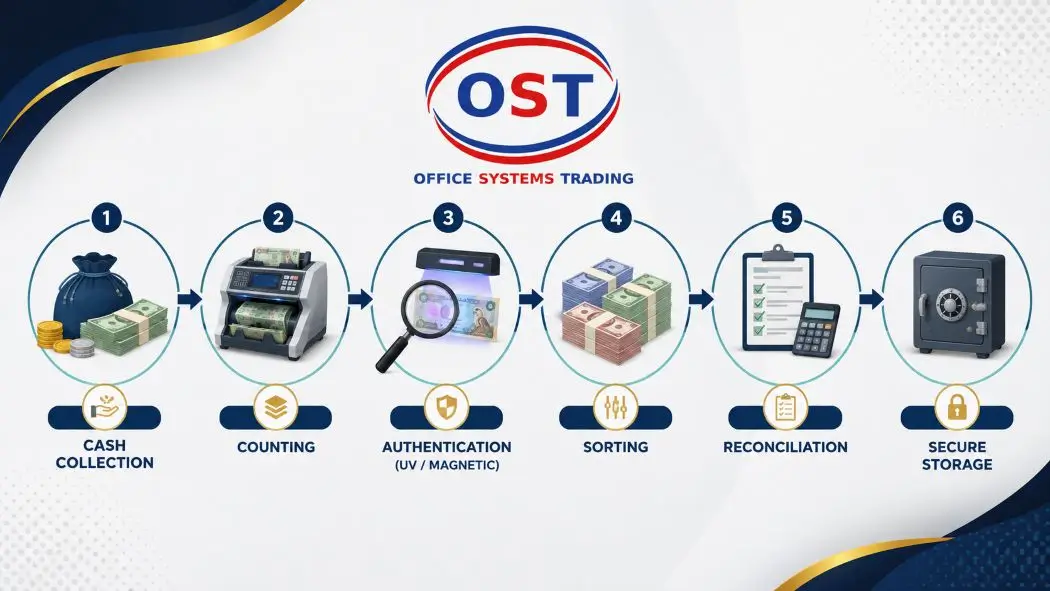
For physical cash operations, the process may look like:
Cash Collection → Counting → Authentication → Sorting → Reconciliation → Secure Storage → Deposit
A cash management system helps businesses improve multiple stages of this process rather than focusing only on counting.
How Do Cash Management Systems Work?
A typical physical cash-management workflow consists of several stages.
1. Cash Collection
Cash is collected from tills, counters, branches, customers or other business locations.
In businesses with multiple outlets, cash may need to be consolidated before processing.
2. Cash Counting
Currency counting machines can quickly determine the number or value of banknotes being processed.
Depending on the machine, businesses may be able to perform:
- Quantity counting
- Value counting
- Batch counting
- Mixed denomination counting
- Multi-currency counting
3. Banknote Authentication
Counterfeit detection technology can examine banknotes using multiple security features.
Depending on the equipment, detection technologies can include:
- Ultraviolet detection
- Magnetic detection
- Infrared detection
- Optical recognition
- Image-based verification
Using multiple detection methods can provide stronger protection than relying on visual inspection alone.
4. Currency Sorting
Sorting machines can separate notes according to characteristics such as:
- Denomination
- Currency
- Orientation
- Fitness
- Authentication status
This is particularly useful for businesses processing large volumes of banknotes.
5. Reconciliation
Once cash has been counted and processed, the results can be compared with expected amounts.
This helps identify:
- Counting discrepancies
- Cash shortages
- Overages
- Processing errors
- Recording inconsistencies
6. Secure Cash Storage and Deposit
After processing, cash can be prepared for secure storage, collection or bank deposit.
Key Components of a Cash Management System
A complete solution can contain several different types of equipment.
Currency Counting Machines
Currency counters are designed to automate the counting of banknotes.
They are useful for businesses that regularly handle cash and need faster, more consistent counting.
Depending on the model, features can include:
- High-speed counting
- Batch counting
- Value counting
- Mixed denomination counting
- Counterfeit detection
- Multi-currency processing
For businesses starting with cash automation, a currency counter is often one of the simplest ways to reduce manual counting.
Products by Category
-
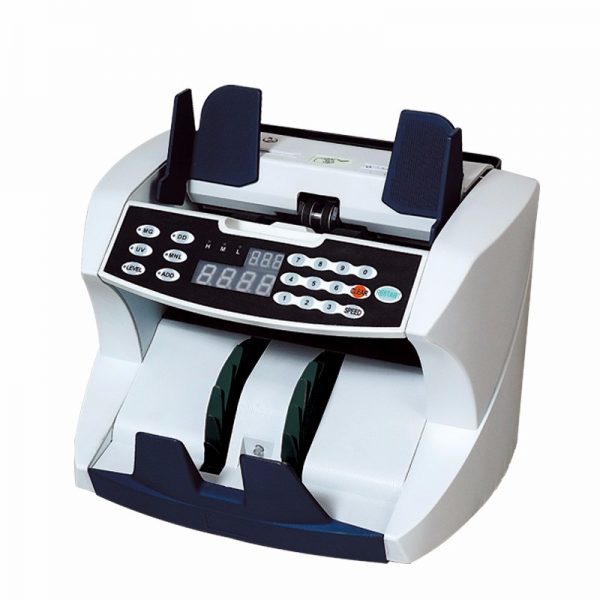
BAIJIA BJ-2100UV Currency Counting Machine
575.00 AED -
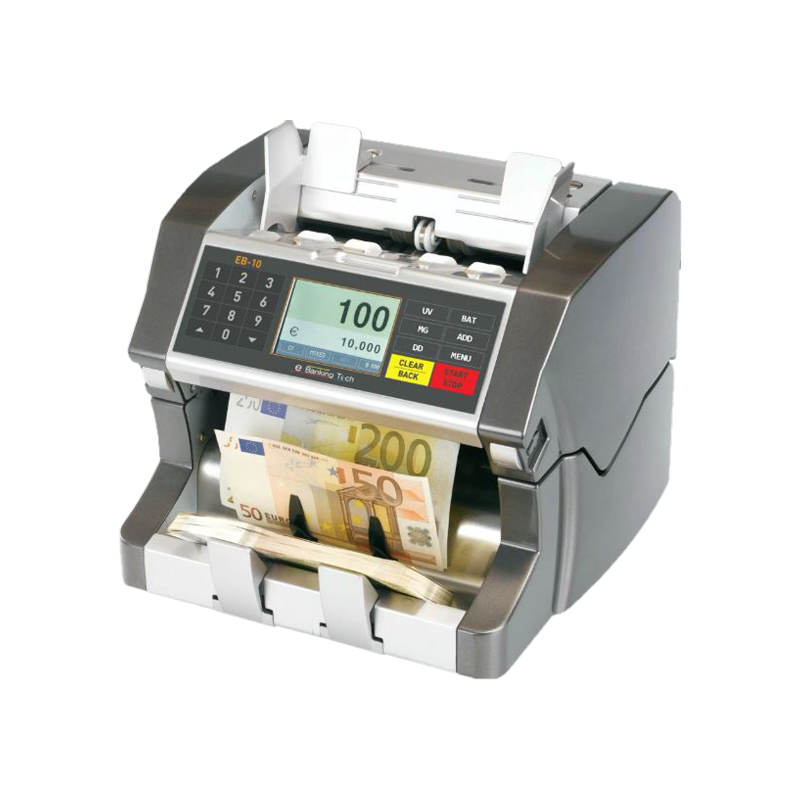
EBANKING EB-10 Heavy Duty Currency Counter
2,300.00 AED -
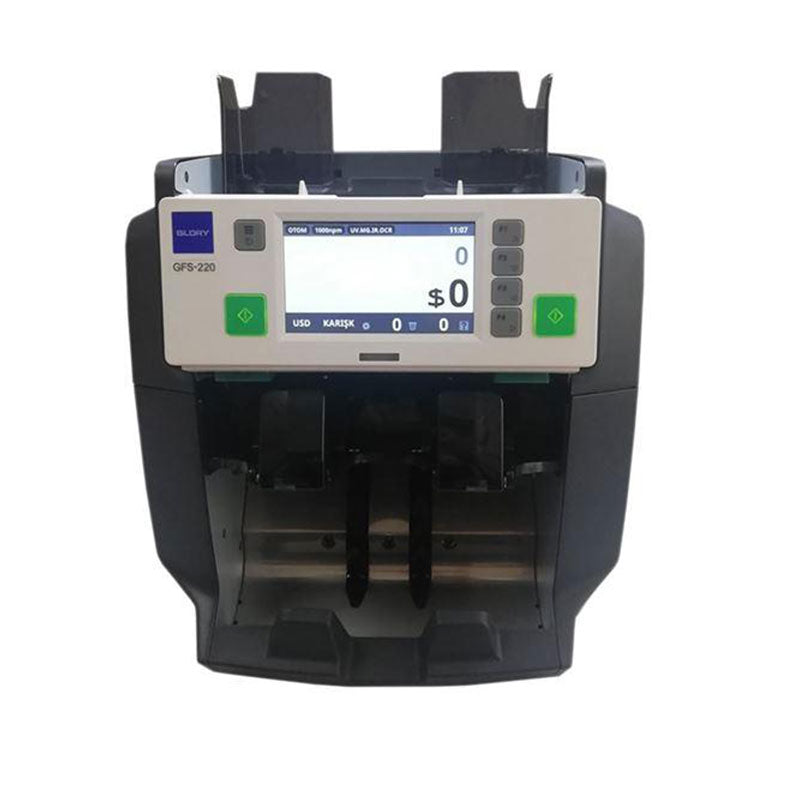
GLORY GFS220CS Banknote Counting Machine
9,200.00 AED
Currency Sorting Machines
Sorting machines take cash processing a step further.
Instead of simply counting notes, they can separate banknotes according to denomination, currency or other characteristics.
Advanced machines can also support fitness sorting and authentication.
They are particularly useful for:
- Banks
- Exchange houses
- Cash-in-transit companies
- Large retailers
- High-volume cash operations
Counterfeit Detection Systems
Counterfeit detection is a critical part of cash security.
Modern equipment can use different technologies to examine banknotes and identify suspicious notes.
Businesses should consider machines with appropriate authentication capabilities rather than relying solely on manual inspection.
For UAE businesses, this is especially relevant when processing large volumes of UAE Dirham or multiple currencies.
Products by Category
-
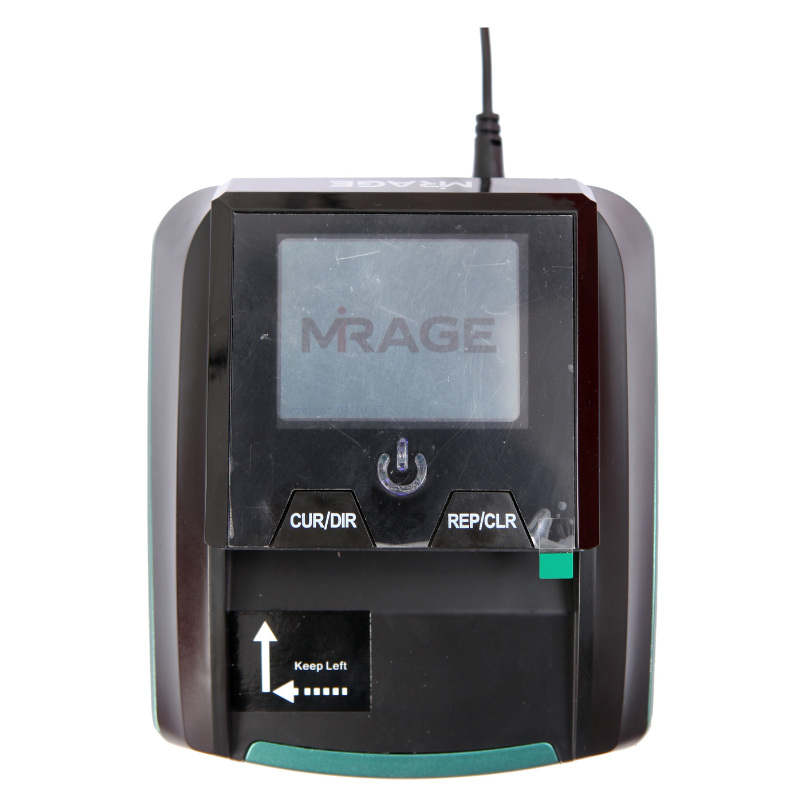
MIRAGE CD-747 Banknote Detector
1,035.00 AED -
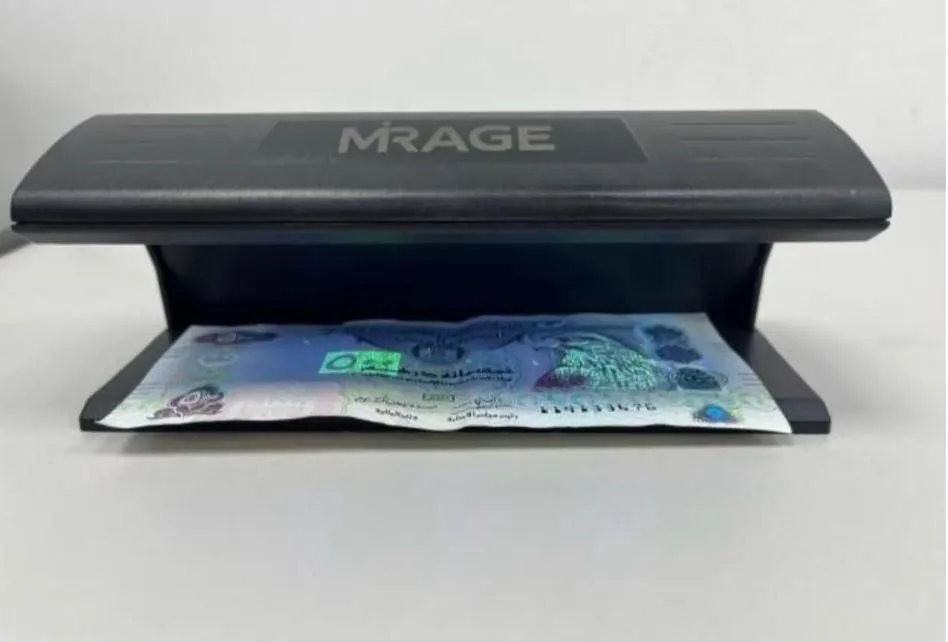
Mirage MD 85 Currency Detector
97.75 AED -
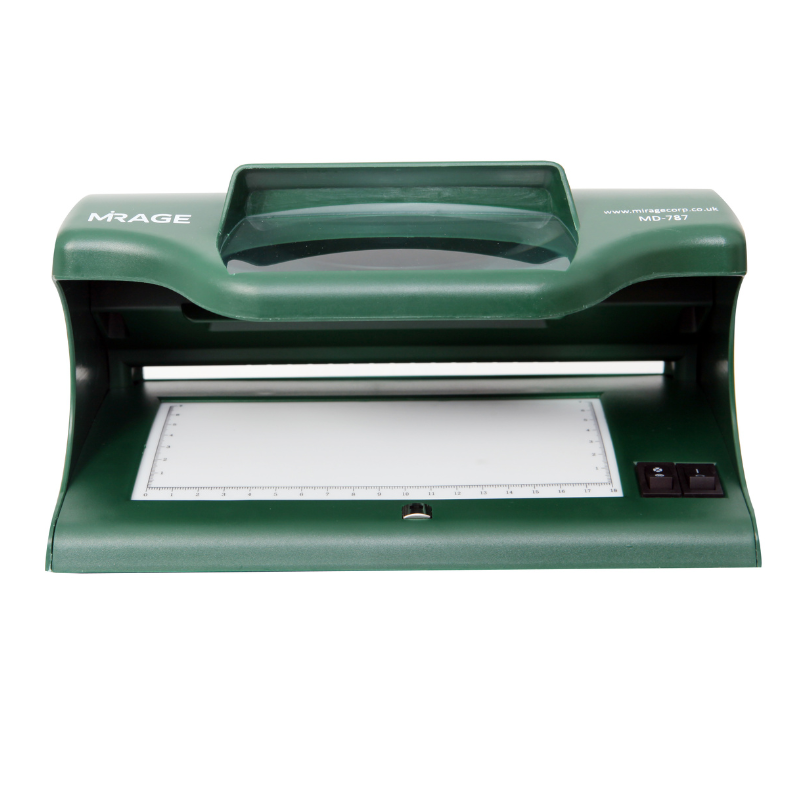
MIRAGE MD-787 Multi-Functional Note Counterfeit Detector
241.50 AED
Coin Counting and Sorting Systems
Cash management is not only about banknotes.
Businesses handling significant volumes of coins can use:
- Coin counters
- Coin sorters
- Mixed coin processing machines
- Coin bagging systems
These solutions can reduce the time employees spend manually counting and separating coins.
Benefits of Cash Management Systems
1. Faster Cash Processing
Automated machines can process cash considerably faster than manual counting.
This becomes increasingly valuable when businesses process large volumes every day.
2. Improved Accuracy
Manual counting creates opportunities for human error.
Automated counting and sorting can help create a more consistent process.
3. Better Counterfeit Protection
Authentication features can help businesses identify suspicious banknotes during processing.
4. Reduced Manual Work
Employees can spend less time performing repetitive counting and sorting tasks.
5. Improved Cash Reconciliation
A structured process makes it easier to compare processed cash against expected amounts.
6. Better Cash Security
Controlled processing reduces unnecessary handling and can improve accountability.
7. Higher Operational Efficiency
Faster processing can help businesses move cash through their operations more efficiently.
Manual Cash Handling vs Automated Cash Management
| Factor | Manual Cash Handling | Automated Cash Management |
|---|---|---|
| Counting | Manual | Automated |
| Processing Speed | Lower | Higher |
| Human Involvement | High | Reduced |
| Counterfeit Checking | Often manual | Automated detection available |
| Sorting | Manual | Automated |
| Large Cash Volumes | Difficult | More suitable |
| Reconciliation | Manual processes | More structured |
| Error Risk | Higher | Can be reduced |
| Scalability | Limited | Better scalability |
Automation does not eliminate the need for proper controls and trained staff, but it can significantly improve the efficiency and consistency of physical cash processing.
Who Needs Cash Management Systems?
Banks
Banks may process substantial volumes of banknotes every day.
Cash management equipment can support:
- High-speed counting
- Banknote sorting
- Fitness sorting
- Counterfeit detection
- Denomination processing
- Cash reconciliation
Exchange Houses
Exchange houses have particularly demanding cash-processing requirements because they may handle multiple currencies and denominations.
Important capabilities can include:
- Multi-currency counting
- Mixed denomination processing
- Authentication
- Sorting
- High-speed processing
- Cash reconciliation
Retail Stores
Retail businesses can use cash management systems to improve end-of-day cash processing.
Common applications include:
- Till reconciliation
- Cash counting
- Counterfeit detection
- Cash sorting
- Deposit preparation
Supermarkets
High-volume supermarkets can benefit from automated cash processing because multiple tills may generate substantial amounts of cash throughout the day.
Hotels
Hotels often handle cash across reception desks, restaurants, retail areas and other departments.
A structured cash management process can help improve accountability and reconciliation.
Cash-in-Transit Companies
Cash-in-transit operations require high-speed and secure cash processing.
Advanced banknote counting and sorting equipment can support large-volume operations.
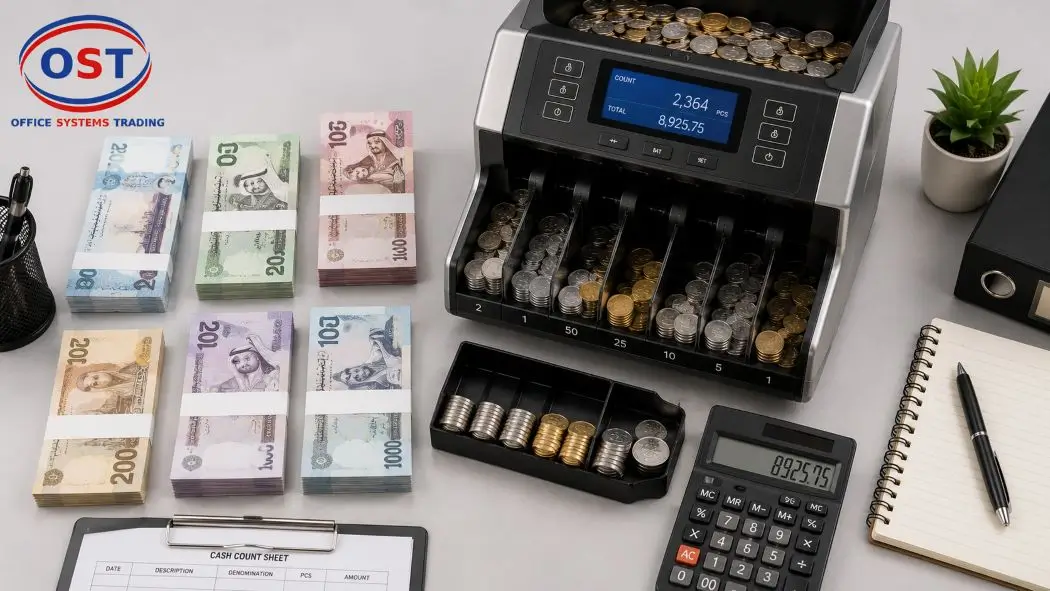
Cash Management Systems in the UAE
The UAE presents a particularly relevant market for advanced cash-handling solutions.
Businesses may need to manage:
- UAE Dirham banknotes
- Multiple foreign currencies
- Mixed denominations
- High cash volumes
- Counterfeit risks
- Multiple business locations
- Daily reconciliation requirements
The UAE market also has a strong ecosystem of banking, retail, exchange-house and cash-processing operations.
Importantly, cash management in the UAE can mean different things. Banks commonly use the term for payments, collections, liquidity and working-capital services.
For businesses looking for physical cash-processing technology, however, the focus is on cash handling, counting, sorting, authentication and automation.
That distinction makes it easier to select the right solution for your operational requirements.
Cash Management Systems Across the GCC
The need for efficient physical cash processing extends beyond the UAE.
Businesses across:
- Saudi Arabia
- Qatar
- Kuwait
- Oman
- Bahrain
- UAE
may require cash-handling equipment for banking, retail, exchange, hospitality and other cash-intensive environments.
For GCC businesses, multi-currency capability can be particularly important where operations involve local currencies alongside international currencies.
Important Features to Look For
Not every business needs the same equipment.
Before choosing a cash management system, consider the following.
Counting Speed
How many notes does the machine need to process per minute?
Currency Compatibility
Does the system support the currencies your business actually handles?
Mixed Denomination Processing
Can it recognize different denominations without manually separating them?
Counterfeit Detection
What authentication technologies are included?
Sorting Capability
Do you need basic counting or advanced denomination and fitness sorting?
Hopper Capacity
How much cash can be loaded at one time?
Batch Counting
Can the machine automatically create predefined batches?
Value Counting
Can it calculate the total monetary value rather than simply the number of notes?
Scalability
Can the solution handle increased cash volumes as your business grows?
Support and Maintenance
Availability of technical support, maintenance and spare parts should also be considered when purchasing professional equipment.
How to Choose the Right Cash Management System
Start with your actual cash-processing requirements rather than choosing equipment based only on speed or price.
Step 1: Calculate Your Cash Volume
Determine how much cash you process daily or weekly.
Step 2: Identify Your Currencies
Determine whether you process only AED or multiple currencies.
Step 3: Determine Your Processing Requirements
Do you only need counting, or do you also require:
- Sorting
- Authentication
- Fitness checking
- Value counting
- Reconciliation
Step 4: Evaluate Security Requirements
Businesses handling significant cash volumes should consider appropriate authentication and security features.
Step 5: Consider Processing Speed
High-volume businesses may benefit from higher-speed equipment.
Step 6: Consider Future Growth
Choose equipment that can accommodate expected increases in cash volume.
Step 7: Evaluate Service and Support
Professional equipment should be supported by appropriate technical assistance and maintenance.
Common Cash Management Problems and Solutions
| Problem | Potential Solution |
|---|---|
| Manual counting takes too long | Currency counting machine |
| Mixed denominations are difficult to process | Value counter or sorter |
| Counterfeit notes create risk | Multi-feature authentication |
| Cash sorting is labor-intensive | Banknote sorting machine |
| Large volumes create processing delays | High-speed cash processing |
| Cash discrepancies are difficult to identify | Structured counting and reconciliation |
| Coin processing is time-consuming | Coin counting and sorting equipment |
Cash Management System vs Currency Counting Machine
These terms should not be treated as identical.
A currency counting machine performs a specific task: counting banknotes.
A cash management system can involve a broader set of processes and technologies.
For example:
Counting + Authentication + Sorting + Reconciliation + Security + Reporting
A currency counter can therefore be one component within a broader cash management strategy.
This distinction is important when evaluating equipment because businesses should choose a solution according to their complete workflow rather than simply purchasing the fastest counter available.
How Cash Automation Can Improve Business Operations
Cash automation is particularly valuable when repetitive manual processes become a bottleneck.
A business may begin with manual counting because its cash volume is relatively low.
As transaction volumes increase, however, employees may spend more time:
- Counting notes
- Separating denominations
- Checking suspicious notes
- Preparing deposits
- Reconciling cash
- Investigating discrepancies
Automation can move many of these repetitive activities into a more standardized workflow.
The result can be a process that is faster, more consistent and easier to control.
What Should Businesses Consider Before Investing?
Before purchasing a system, ask:
- How much cash do we process?
- How many currencies do we handle?
- Do we need mixed denomination counting?
- Do we need sorting?
- Do we need counterfeit detection?
- Do we process coins?
- How quickly must cash be processed?
- How much automation do we actually need?
- What level of security is required?
- What technical support will be available?
Answering these questions can help narrow down the right type of equipment.
Why Choose a Cash Management Solution Based on Your Workflow?
There is no universal cash management system that is ideal for every business.
A small retail store may only need a reliable currency counter with counterfeit detection.
An exchange house may need multi-currency processing and advanced sorting.
A bank or cash-in-transit company may require high-speed sorting, authentication and fitness processing.
The right solution should therefore be matched to:
Cash volume + Currency requirements + Processing needs + Security requirements + Business growth
Frequently Asked Questions
A cash management system is a combination of equipment, technology and processes used to count, process, authenticate, sort, reconcile and securely manage physical cash.
Common equipment includes currency counting machines, banknote sorting machines, counterfeit detectors, coin counters, coin sorters and other cash-processing technologies.
Cash handling generally refers to the physical movement and processing of cash, while cash management covers the broader system of controls, equipment and processes used to manage the cash cycle.
Yes. Many professional currency counters and sorting machines include counterfeit-detection technologies such as UV, magnetic, infrared and optical authentication. The exact capabilities depend on the equipment model and currency requirements.
Yes. Retailers can use cash management equipment for counting daily takings, detecting suspicious notes, sorting denominations and improving cash reconciliation.
Final Thoughts
Effective physical cash management is about more than simply counting money.
For businesses in the UAE and GCC, a well-designed cash management approach can bring together currency counting, banknote sorting, counterfeit detection, coin processing, reconciliation and automation into a more efficient workflow.
The right solution depends on the organization’s cash volume, currencies, processing requirements and security needs.
Whether you operate a bank, exchange house, retail business, supermarket, hotel or other cash-intensive operation, choosing the appropriate cash management equipment can help create a faster and more controlled cash-processing environment.
For businesses evaluating cash-handling technology in the UAE and GCC, Ostmena can help identify solutions based on the type and volume of cash your organization processes.
Get the Right Machine for Your Business, Not Just Any Machine
Every business on this list needs something slightly different, and picking the wrong model is an expensive mistake to fix later. Talk to Ostmena’s team about your daily cash volume and currency mix, and get matched with the right counter the first time. Visit the Ostmena blog for more buying guides, or head straight to the product range to compare models.
Explore the collection here →