





Blogs

If you have ever counted a thick stack of cash by hand, you already know the feeling. Your fingers go numb, your brain starts making up numbers, and somewhere around note 200 you lose count and have to start over. A currency counting machine exists so you never have to feel that pain again.
But here’s the catch: not every counting machine does the same job. Only count. Some count and check for fakes. Some sort notes by denomination, and a few do all of it at once while also telling you which notes are too worn out to keep circulating. Picking the wrong one is like buying a bicycle when you actually needed a delivery van.
This guide breaks down the 7 types of currency counting machines, explains how a banknote sorter differs from a basic counter, and helps you match the right currency counter type to your business, whether you run a small shop or a busy cash office in the UAE.
Why the Right Currency Counting Machine Matters
Cash handling errors cost businesses real money. A single miscount during a shift handover can throw off your entire end-of-day reconciliation. Multiply that across a week, and you have a headache that no spreadsheet can fix on its own.
A good machine does three things well. It counts fast. It counts accurately. And depending on the model, it tells you whether the note in your hand is genuine or a clever piece of paper someone tried to pass off as real money.
That third point matters more than people think. Counterfeiters do not always use fancy printing presses anymore. Many simply copy onto wood-based paper that looks “close enough” to pass a quick glance, rather than investing in expensive equipment. That is exactly why detection technology like UV, magnetic, and infrared sensors exists, and why it shows up across several of the machine types below.
The 7 Types of Currency Counting Machines
1. Basic Note Counters
This is the entry point. A basic note counter does one job: it counts notes and gives you a total. No counterfeit detection, no sorting, just speed and a number on the screen.
These machines suit small retail counters, cafes, or anywhere staff need a quick total without a full cash-handling setup. They are usually the most affordable option, which makes them a sensible starting point if your daily cash volume is modest.
The trade-off is obvious. If a fake note slips into the stack, a basic counter will count it right along with the real ones. It has no way to tell the difference.
2. Currency Counters with Counterfeit Detection
This is where things get smarter. These machines count notes and run them past a battery of checks at the same time, usually combining UV, magnetic, and infrared detection, since multi-detection systems verify authenticity using these combined technologies rather than relying on a single test.
Here’s how each check works in plain terms. UV detection shines ultraviolet light on the note to reveal fluorescent marks invisible under normal light, marks created with special dyes that only glow under UV exposure. Magnetic detection looks for the iron-oxide ink genuine currency uses in specific areas like serial numbers, ink that is hard to replicate with standard printing. Infrared detection studies how a note absorbs and reflects infrared light, since authentic bills create a distinct, very specific pattern that counterfeit notes typically fail to match.
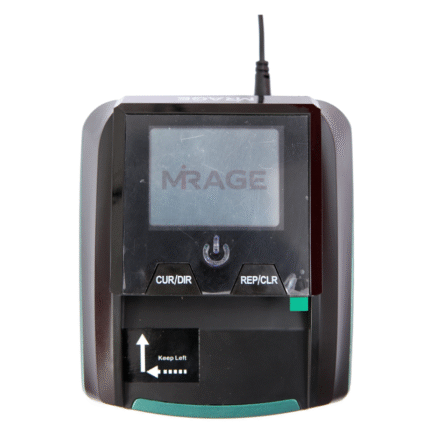
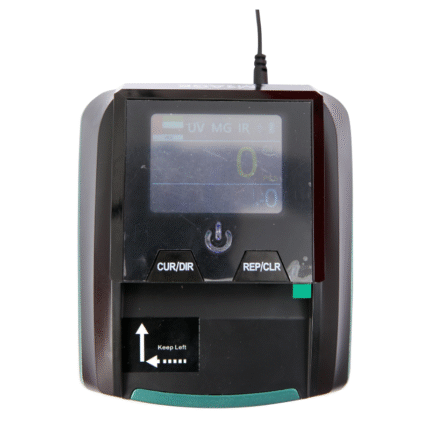

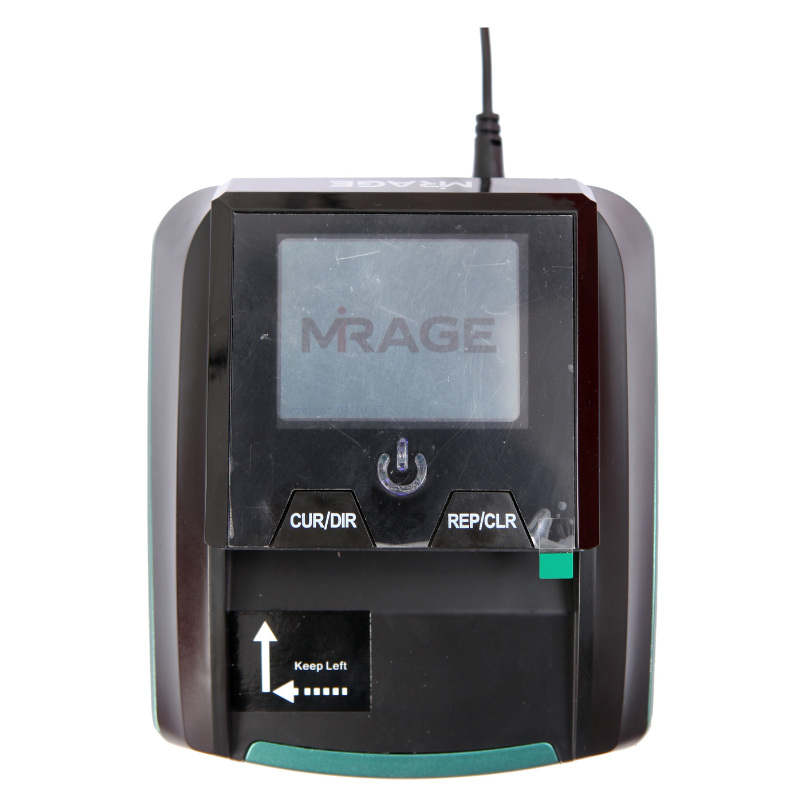
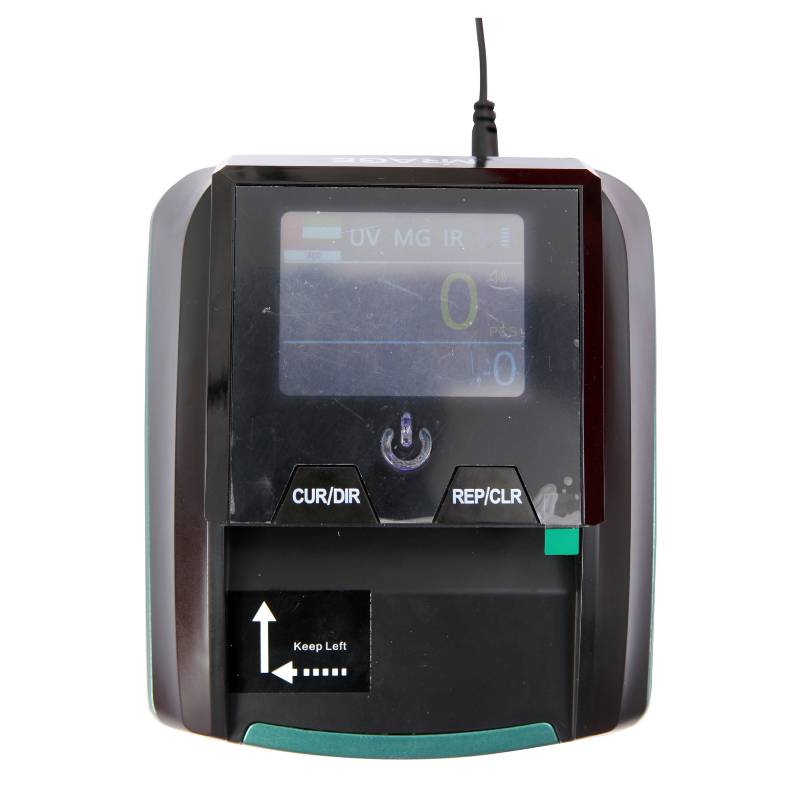
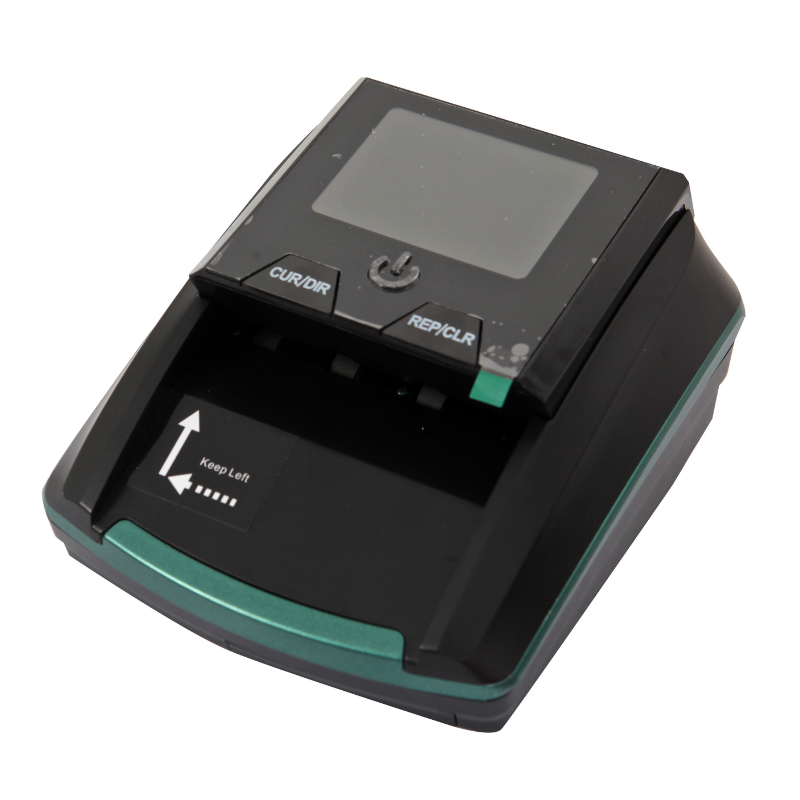
A machine combining multiple methods is more reliable than one relying on a single check, because forgery techniques keep evolving and no single test catches everything on its own. This is the category most banks, exchange offices, and cash-heavy retailers actually need, and it’s well represented in Ostmena’s Counterfeit Currency Detectors range, alongside dedicated counting and sorting models in the Currency Counting & Sorting Machines collection.
3. Mixed Denomination Counters
Ever dumped a random pile of notes into a drawer and had no idea what the total was without sorting it first? A mixed denomination counter solves exactly that problem. Feed it a jumbled stack of different note values, and it identifies each one, totals everything up, and gives you a clear breakdown by denomination.
This matters a lot for businesses that take cash all day from many hands, like supermarkets, fuel stations, or restaurants. Instead of separating notes manually before counting (which defeats the purpose of owning a machine), staff can drop the whole pile in at once.
Many modern note counters and discriminators handle mixed denominations as a standard feature rather than an extra. It’s less about buying a separate machine and more about checking this capability before you buy.
4. Banknote Sorters (Discriminators)
Here is where the difference between a “sorter” and a “counter” really shows up, and it’s worth pausing on this, because the terms get mixed up constantly online.
A counter tells you how much money you have. A sorter (often called a discriminator) physically separates notes into different pockets based on denomination, currency, or condition. Think of a two-pocket banknote discriminator: one pocket collects notes that pass every check, the second pocket catches anything rejected, whether that’s a different denomination, a suspect note, or simply a bill in poor shape.
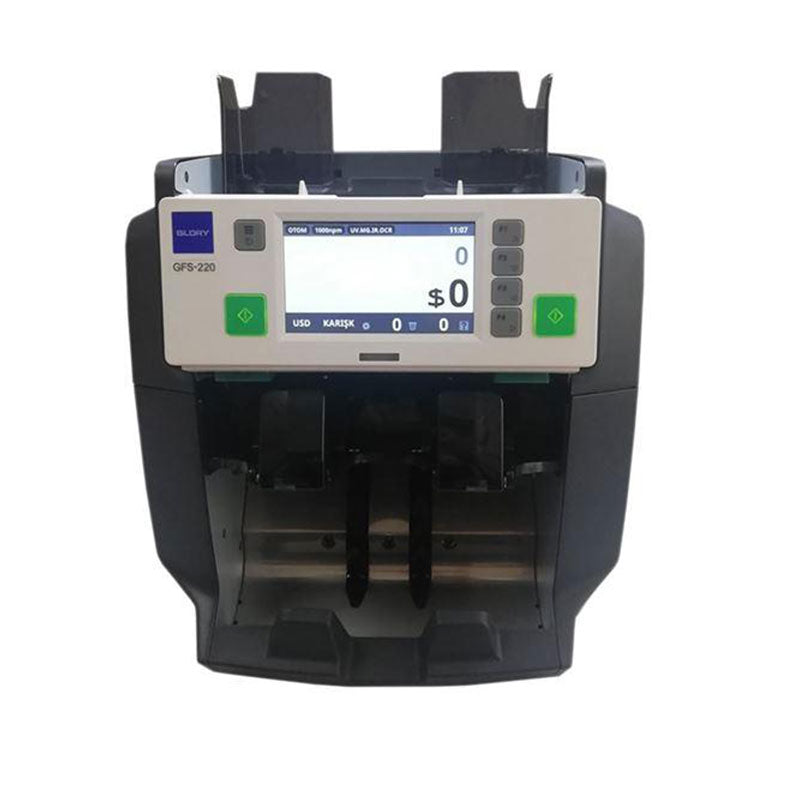
This matters for high-volume operations. A bank teller processing hundreds of mixed notes an hour does not have time to manually pull out questionable bills one by one. The machine does that sorting automatically, in real time, as it counts.
Ostmena carries genuine two-pocket and multi-pocket sorting machines, including models like the Glory GFS220 dual pocket banknote sorter, which uses its second pocket to separate out damaged, poor-quality, or rejected notes while the main pocket handles verified currency.
5. Fitness Sorters
This type deserves its own category because it solves a problem that pure counting and pure sorting do not. A fitness sorter checks the physical condition of each note, looking for holes, tears, dog-ears, tape, stains, folds, or fading, and separates the “fit” notes from the ones that need to be pulled out of circulation.
This is more than tidiness. Banks have standards for what counts as a circulation-worthy note, and feeding worn-out, taped-together bills back into circulation creates problems for the next person who tries to use them in a vending machine or ATM.
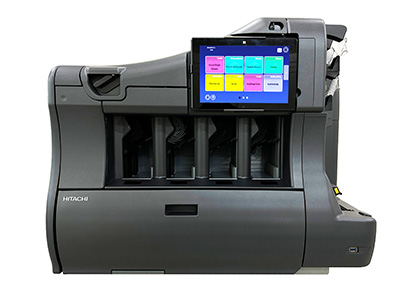
Hitachi’s MS-4200 is a real example available through Ostmena, and it’s built specifically for this. It checks for holes, tears, dog-ears, tape, soil, stains, folds, and de-inked patches, running continuous fitness sorting and authentication at 1,200 notes per minute, alongside value counting at up to 72,000 banknotes per hour . You can find it directly on Ostmena’s Hitachi collection.
6. Strapped or Bundled Note Counters
Banks and cash-in-transit companies do not always count loose notes. A lot of currency moves around already strapped or banded in bundles of 100. Counting these by hand, or even running them through a standard counter, is slow and impractical.
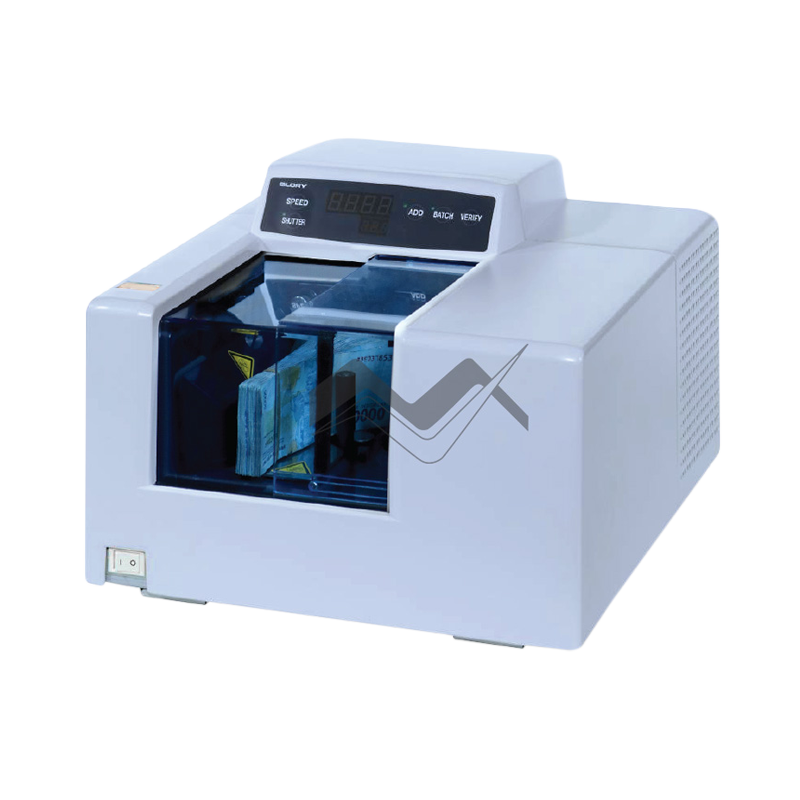
A strapped note counter is purpose-built to verify bundles without breaking the band. The Glory GND-710, available through Ostmena, is a real-world example: it counts strapped currency at selectable speeds of 1,000, 1,500, 2,000, or 2,400 pieces per minute, and intentionally offers a slower setting built for handling poor-quality or damaged notes without misreads.
If your operation regularly handles bank-grade bundled cash, this category is worth a dedicated machine rather than trying to force a general counter to do the job.
7. Portable and Heavy-Duty Counters
This last category is less about function and more about scale, and it’s where “currency counter types UAE” buyers usually land when comparing options for different store sizes.
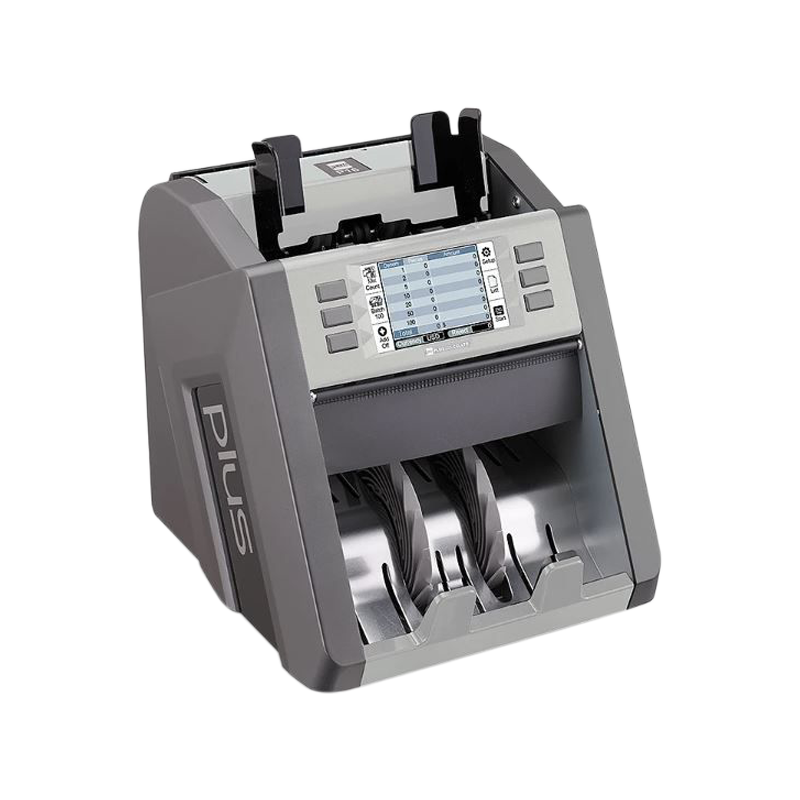
A portable counter is compact, lightweight, and built for teller counters, small retail spaces, or back-office use where desk space is tight. The PLUS P-16, for example, is a single-pocket discriminator small enough for everyday teller use, with a 4.3-inch touchscreen and the ability to handle up to 15 currencies. You’ll find it, along with similar compact models, in Ostmena’s PLUS Banknote Counters collection.
A heavy-duty counter, on the other hand, is built for continuous, high-volume use, think banks, exchange houses, or processing centers running machines for hours without a break. These models prioritize durability and sustained accuracy over portability, often supporting a wider range of currencies and faster counting speeds.
Banknote Sorter vs Counter: The Quick Answer
Since this comparison trips people up constantly, here it is in one place. A counter gives you a total. A sorter physically separates notes into categories as it counts them. Many modern machines do both at once, counting and sorting in a single pass, which is why the line between “counter” and “sorter” has blurred over the past decade. When you’re comparing products, check the pocket count (one, two, or three) and whether it lists “discriminator” or “fitness sorting” among its features. That tells you whether you’re looking at a pure counter or a true sorter.
How to Choose the Right Machine for Your Business
Start with your volume. A small shop counting a few hundred notes a day does not need the same machine as a bank branch processing thousands.
Then think about risk. If you regularly accept cash from the public, counterfeit detection is not optional. The cost of one fake high-value note easily outweighs the price difference between a basic counter and a detection-equipped model.
Consider your currency mix too. Businesses in the UAE often deal with multiple currencies from tourists and international clients, so a model supporting multi-currency detection, like options handling 15 or even 32 currencies, saves you from needing separate machines for separate cash drawers.
Finally, think about note condition. If you’re a bank, exchange office, or anyone responsible for recirculating cash, a fitness sorter is not a luxury, it’s part of doing the job properly.
Final Thoughts
There is no single “best” currency counting machine, only the best one for your specific situation. A small cafe and a busy exchange counter have completely different needs, and trying to force one machine to do a job it wasn’t built for usually ends in frustration, jammed notes, or worse, an undetected counterfeit bill.
Walk through the seven types above, match them against your daily volume, currency mix, and risk tolerance, and you’ll land on the right fit without overspending or under-protecting your cash drawer. Ostmena’s full range, spanning Coin Counting & Sorting Machines and Currency Counting & Sorting Machines from brands including Glory, Hitachi, Mirage, and PLUS, covers every category in this guide.
Frequently Asked Questions: 7 Types of Currency Counting Machines
A counter simply totals the value of notes fed into it. A sorter, or discriminator, physically separates notes into different pockets based on denomination, currency, or condition while it counts. Many machines today combine both functions in one device.
If your business regularly handles cash from the public, counterfeit detection is worth the extra cost. A basic counter cannot tell a fake note from a real one; it will count both at face value, which leaves you exposed to loss.
A fitness sorter inspects the physical condition of each note, flagging holes, tears, tape, stains, folds, and fading so worn-out notes can be pulled from circulation instead of being passed back out to customers or ATMs.
Yes. Many currency counting machines now support multiple currencies in a single unit, with some models handling 15, 32, or even more, which is especially useful for businesses in the UAE that deal with international cash regularly.
A portable counter is compact and suited to teller counters or small retail spaces with light to moderate daily volume. A heavy-duty counter is built for continuous, high-volume operation in banks or processing centers and prioritizes durability over size.
